If you're somewhere in your second trimester and you just felt a sudden, sharp pain low on one side of your belly when you stood up from the couch, there's a good chance it was your round ligament. I see this all the time in our office, and the first thing I tell my pregnant patients is: it's almost always normal, and it's almost always something we can help with.
But "almost always" isn't "always," so let me walk you through what round ligament pain actually is, what it feels like, when it should worry you, and what we can do about it. I work with a lot of expecting moms from Magnolia, The Woodlands, Tomball, and Spring, and round ligament pain is one of the most common things we treat in pregnancy.
What the Round Ligament Actually Does
You have two round ligaments: one on each side. They run from the upper part of your uterus down through your groin and attach near the labia. Their job is to hold your uterus in position. Outside of pregnancy, they're short, dense, and don't do much.
During pregnancy, your uterus grows from the size of a fist to roughly the size of a watermelon. The round ligaments have to stretch dramatically to keep up, sometimes to several times their original length. That stretching, combined with the rapid changes in pelvic position and weight distribution, is what produces the pain.
What It Feels Like
Round ligament pain is distinctive once you know what to look for:
- Sharp, sudden, stabbing: not a dull ache or cramp
- Low and to one side: usually right or left of midline, near the groin
- Triggered by movement: sneezing, coughing, laughing, getting up too fast, rolling over in bed, twisting
- Brief: typically seconds, sometimes minutes, but not sustained for hours
- Improves with rest: once the trigger movement ends, the pain settles
Most patients describe it as feeling like something pulled too tight inside their lower belly. That description is essentially correct.
Why It Hits Hardest in the Second Trimester
This is when the uterus is growing fastest. The round ligaments don't have time to adapt gradually. They're being pulled and stretched daily. By the third trimester, the rate of growth slows, and many women find round ligament pain decreases or disappears as the ligaments accommodate to their new length.
What's Normal vs. What Isn't
Most round ligament pain is harmless. But certain combinations of symptoms warrant a call to your OB or midwife rather than waiting it out. Call your provider if you have:
- Pain that's constant rather than triggered by movement
- Pain accompanied by fever, chills, or feeling generally unwell
- Pain with bleeding or unusual discharge
- Severe, escalating pain that doesn't improve with rest or position change
- Rhythmic pain that builds. That may be contractions
- Pain with reduced fetal movement
- Pain with urinary symptoms (could indicate UTI or kidney stones)
If you're not sure whether what you're feeling is "just" round ligament pain, err on the side of calling. Pregnancy is one place I'd never tell anyone to "wait and see."
What Actually Helps
Position and Movement Awareness
The single biggest thing you can do to reduce round ligament pain is change how you move. The triggers are sudden, large movements. The fix is to move more deliberately:
- Roll to your side and use your arms to push up before standing: don't try to sit straight up from lying down
- Bend at the knees and hips rather than the waist when picking things up
- If you feel a sneeze or cough coming, brace lightly: bend forward slightly and support your belly
- Avoid quick directional changes; let your body catch up
These small adjustments dramatically reduce ligament strain and pain frequency.
Sleep Position
Sleeping on your side with a pillow between your knees and another supporting your belly takes load off the round ligaments and pelvis. A pregnancy pillow is one of the best investments you can make in your second and third trimesters.
Gentle Stretches
Cat-cow, pelvic tilts, and gentle hip openers can help maintain mobility through the pelvis and reduce overall tension on the round ligaments. Always cleared with your OB or midwife first.
Webster Technique Chiropractic Care
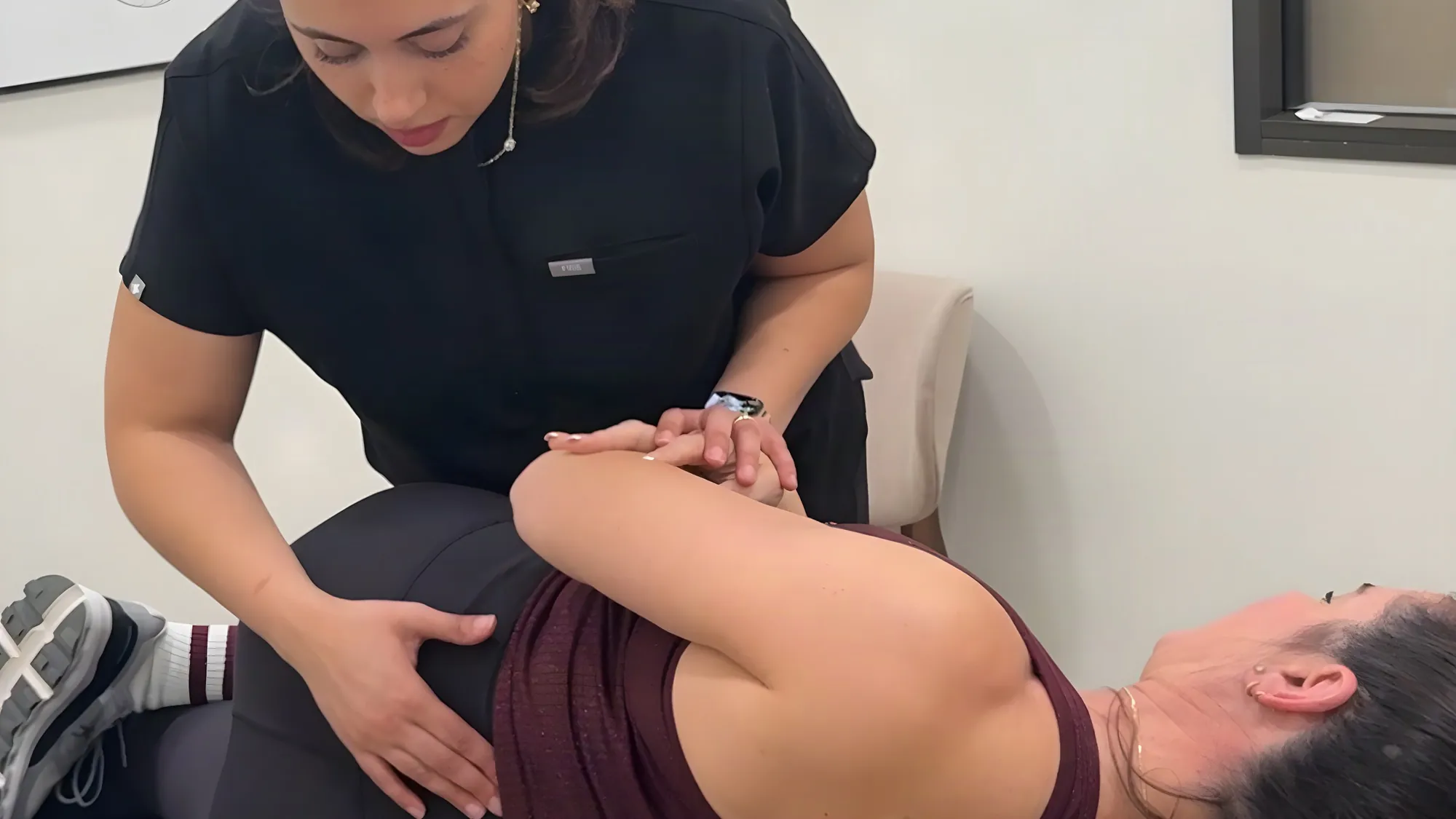
This is where chiropractic care has the most direct impact. Webster Technique is a specific method developed for pregnancy. It focuses on restoring proper pelvic alignment and reducing tension on the soft tissues that attach to the pelvis, including the round ligaments themselves.
When the pelvis sits in a more balanced position, the round ligaments aren't asked to compensate for postural strain on top of the natural pregnancy stretch. The result, for many of my patients, is significant reduction in round ligament pain, often within the first few visits.
Webster also helps with other common pregnancy complaints: lower back pain, sacroiliac pain, sciatica, pubic symphysis pain, and pelvic asymmetry that can affect baby's positioning later in pregnancy.
What a Prenatal Visit Actually Looks Like
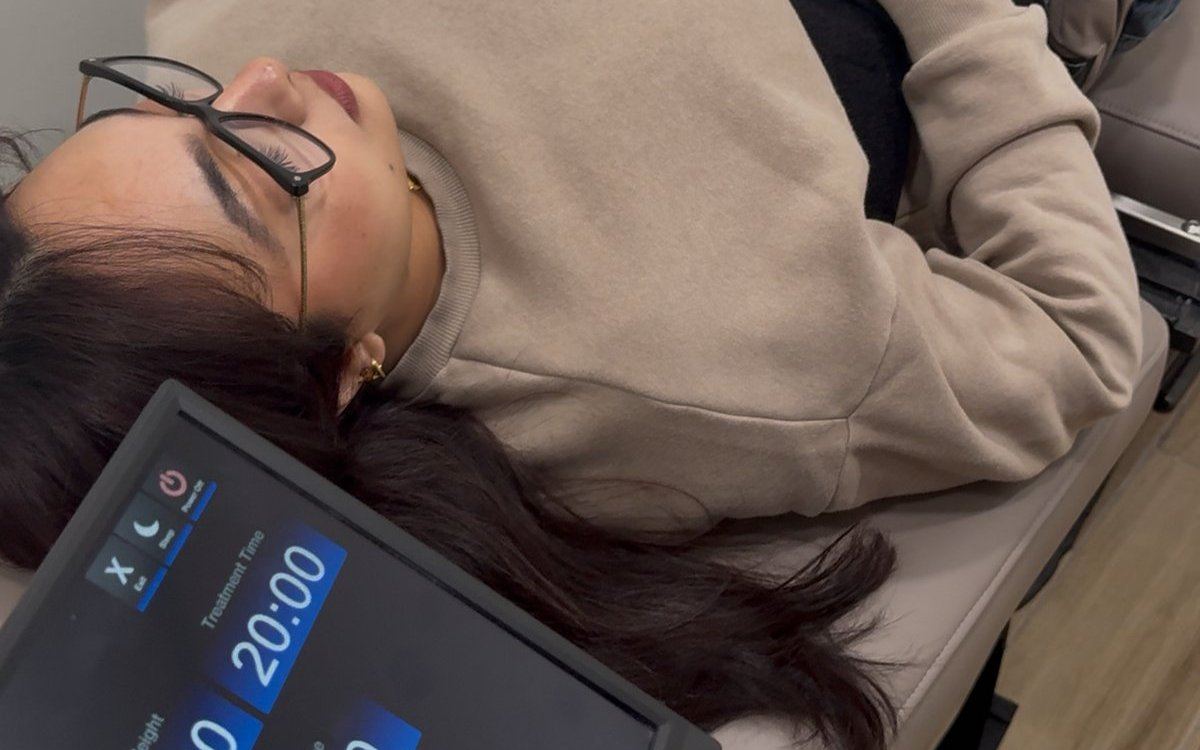
If you've never had chiropractic care during pregnancy, here's what to expect. We use a specially designed table that supports your belly so you can lie face down comfortably, yes, even in the third trimester. The adjustments themselves are gentle. No high-velocity moves. Just precise, low-force corrections to restore alignment.
Most prenatal patients see me weekly through the second trimester and biweekly through the third. Many continue postpartum to address the pelvic and spinal changes that come with delivery and the early months of carrying a newborn.
What I Tell Pregnant Patients on Their First Visit
Round ligament pain isn't dangerous, but it's also not something you should just power through. Pregnancy is hard enough without sharp pains every time you stand up. There are real, evidence-based interventions (Webster Technique, sleep positioning, movement awareness, gentle stretches) that make a measurable difference. Most of my prenatal patients tell me that within a few weeks of starting care, the daily round ligament jolts become rare or stop entirely.
Why Blue Zone
I'm trained in Webster Technique and treat prenatal patients regularly. Many of the moms I see come from Magnolia, The Woodlands, Tomball, and Spring specifically because finding a chiropractor who genuinely specializes in pregnancy care isn't easy. We also offer pediatric chiropractic for the baby once they arrive, so the whole pregnancy-through-postpartum-through-infant care happens in one place.
Our model is grounded in Blue Zones longevity science: the principles of structural balance, low inflammation, and nervous system regulation that drive healthy aging and recovery.
If round ligament pain is making your pregnancy harder than it needs to be, our $99 new patient evaluation covers consultation, exam, and your first treatment. Call (281) 688-5580 or visit bluezonechiro.com to schedule.
The $99 covers your exam, X-rays and your first treatment.
Call (281) 688-5580 or book online to schedule.
Dr. Mariam Mobarak, DC
Dr. Mariam Mobarak is the chiropractor at Blue Zone Advanced Chiropractic in The Woodlands. She combines several chiropractic techniques with therapies like spinal decompression, shockwave and dry needling, and your care is built around your exam and your goals.
TechniquesActivator, Diversified, Gonstead, Thompson, Upper Cervical and Webster
Meet our doctor →︎