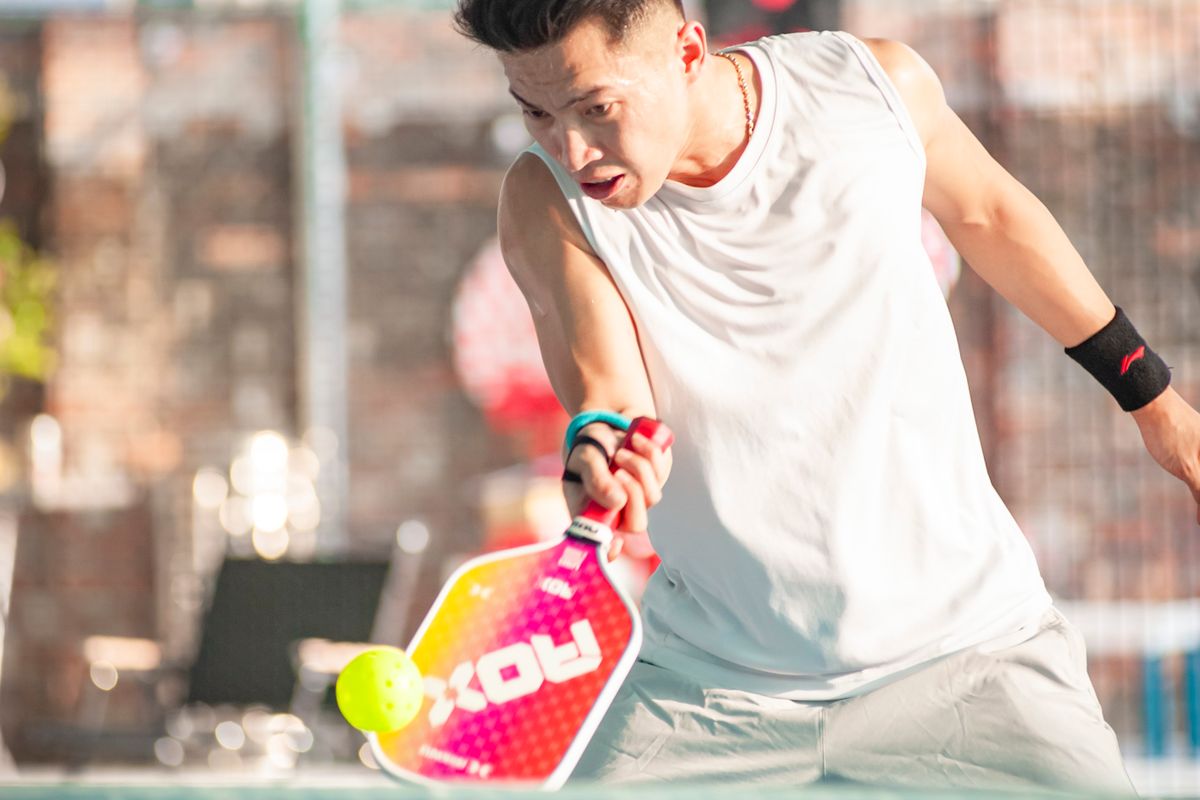
Pickleball has taken over The Woodlands the same way it's taken over everywhere — courts full by 7 a.m., leagues with waitlists, and a steady stream of new patients in our office holding a paddle-side shoulder or a strained calf. The sport's genius is that it's easy to start at any age and any fitness level. That's also exactly why the injuries are surging: bodies are going from the couch to competitive lateral movement with nothing in between.
The injuries we actually see
Shoulder strain and rotator cuff irritation. Overheads, serves, and reaching volleys demand overhead motion that many players — especially those coming from desk careers — haven't done in years. Rounded posture with limited mid-back extension forces the shoulder to hit its overhead positions badly, and the cuff pays.
Pickleball elbow. Same mechanism as tennis elbow: repetitive gripping and wrist action overloading the forearm tendons. Paddle grip size and death-gripping through dinks contribute more than people think.
Calf strains and Achilles trouble. The classic "weekend warrior" injury — an explosive push-off toward the kitchen line and a sudden grab in the calf. Middle-aged tendons that haven't sprinted in a decade get asked for maximal effort with zero warm-up. This category includes the sport's most serious common injury, Achilles rupture, which is why calf preparation matters more in pickleball than almost any other rec sport.
Low back and SI joint flare-ups. The constant bend-and-reach of dinking is essentially hundreds of loaded forward flexions per session, and the rotational lunging feeds one-sided pelvic irritation.
Falls. Backpedaling for a lob is how wrists get fractured and heads get hit. Rule one taught by every coach for a reason: turn and run, never backpedal.
Why it happens: the fitness gap
Almost every pickleball injury traces to the same root: the sport demands quick lateral movement, rotation, and explosive push-off, and most new players bring none of the supporting mobility or strength. The game is gentle enough to play unfit — and demanding enough to injure you for it.
The prevention formula
Five minutes of real warm-up: leg swings, calf raises, trunk rotations, progressive side shuffles before the first game — not after it. Twice-a-week maintenance strength: calf raises (the single highest-value exercise in this sport), split squats, band rows, and hip mobility work. Court habits: no backpedaling, sensible shoes made for lateral movement rather than running shoes, and capping the marathon sessions — injury risk climbs sharply in hour three of "just one more game."
If you're already hurt
Most pickleball injuries respond quickly to conservative care: restoring shoulder and mid-back mechanics for cuff issues, soft-tissue work and load management for elbow and calf, adjustments and stabilization for the back and SI flare-ups. What doesn't work is playing through a calf that's whispering at you — that's the one that becomes a rupture. Sudden pop, immediate weakness, or inability to push off means urgent evaluation, not ice and denial.
Pickleball is one of the best things to happen to midlife fitness in decades. Treat your body like the athlete the sport quietly requires, and you'll be on the court for years.