If you've ever sneezed and felt your lower back instantly lock up, sometimes dropping you halfway to your knees, you know exactly what I'm talking about. It's a particular kind of moment. One second you're standing in your kitchen, the next your low back has decided you're done for the day. Patients describe it as "something snapping," "an electric shock," or "my back just gave out."
Here's the thing patients miss almost universally: the sneeze didn't cause the problem. The sneeze exposed a problem that was already there. A healthy spine handles a sneeze without complaint. A compromised spine doesn't. So when this happens to you, your body is delivering important information about what's going on underneath. Let me walk you through what's actually happening biomechanically, and what the experience is trying to tell you.
The Biomechanics of a Sneeze
A sneeze is a violent, coordinated event. Air pressure builds in the chest cavity. Abdominal muscles contract sharply. The diaphragm contracts. The thoracic and lumbar spine experience a sudden compressive load combined with flexion. Most people automatically forward-bend slightly with a forceful sneeze. The forces involved are surprisingly large. Studies have measured spinal loads during sneezing equivalent to several body weights, all delivered in a fraction of a second.
Here's the critical part: this is normal. Healthy spines manage these loads thousands of times per year without issue. The body has built-in mechanisms (core stabilization, intra-abdominal pressure regulation, disc resilience) that absorb and distribute these forces. When everything is functioning properly, you barely notice.
When something is dysfunctional, the sneeze becomes the moment that gets exposed.
What's Usually Going On Underneath
Several common underlying issues show up as "back went out from a sneeze":
Disc Bulge or Early Herniation
This is the most common cause I see. The sudden flexion-compression load of a sneeze is exactly the worst combination for a disc that's already structurally compromised. The disc may have been gradually weakening for months or years without producing symptoms. The sneeze is the moment that pushes it past threshold. The acute pain that follows isn't the sneeze itself. It's nerve root irritation, ligament strain, and muscle spasm responding to the sudden change in disc structure.
Patients with a disc-related sneeze episode often have:
- Pain radiating into the buttock or leg
- Difficulty bending forward
- Numbness or tingling in a specific distribution
- Worse pain with sitting than with standing or walking
- Pain that improves slightly when lying down
Facet Joint Dysfunction
The facet joints are small joints at the back of each vertebra. When they're restricted or have low-grade arthritis, sudden movements can produce acute irritation. The sneeze loads them rapidly, and they respond with significant pain and surrounding muscle guarding. Facet-related episodes typically produce localized lower back pain without leg radiation.
Sacroiliac Joint Strain
The sacroiliac joints transmit load between spine and pelvis. They have limited motion but bear significant force. A sneeze can cause acute irritation, particularly in patients with chronic SI dysfunction or asymmetric pelvic mechanics. Pain typically presents at one or both sides of the lower back, sometimes referring into the buttock or upper thigh.
Muscle Strain
Sudden muscle activation during a sneeze can produce acute strain in the spinal extensors or abdominal wall. Less common than the joint and disc issues, but possible, particularly in patients with weak or poorly coordinated trunk muscles.
Lumbar Instability
Some patients have measurable instability at one or more lumbar levels: the vertebrae move more than they should under load, often due to chronic ligament damage or disc degeneration. These patients respond to sudden loads with cascading muscle spasm as the body tries to stabilize what's structurally unstable.
What This Episode Is Telling You
The most important thing to understand: the sneeze was a stress test. Your spine just demonstrated that it has reached the threshold where normal daily forces produce significant problems. This is information.
If you've never had this happen, then experienced it once or twice, your spine is signaling that something has shifted. Maybe a long-term postural pattern. Maybe gradual disc degeneration. Maybe core weakness from prolonged sitting. Whatever the underlying issue, it has reached the point where everyday forces are now problems.
The wrong response is to wait for it to happen again, hope it gets better on its own, and keep doing whatever you've been doing. The right response is to actually figure out what's going on so you can address it.
What I Look For on Exam
When a patient comes in describing this experience, I'm looking for:
- Range of motion patterns: what's restricted, what produces pain
- Disc provocation tests: specific movements that reproduce symptoms in a disc pattern
- Neurological screening: reflexes, sensation, motor strength to rule out significant nerve involvement
- Facet provocation: extension and rotation patterns specific to facet involvement
- SI joint assessment: provocation tests specific to sacroiliac issues
- Core function: deep core activation patterns, often weak in patients with these episodes
- Hip mobility: restrictions that increase load on the lumbar spine
- Postural patterns: chronic patterns that contributed to the underlying weakness
Imaging (usually X-ray for structural assessment, MRI if disc involvement is suspected and not improving) clarifies what's structurally happening.
What Real Treatment Looks Like
Acute Phase (Days 1-7)
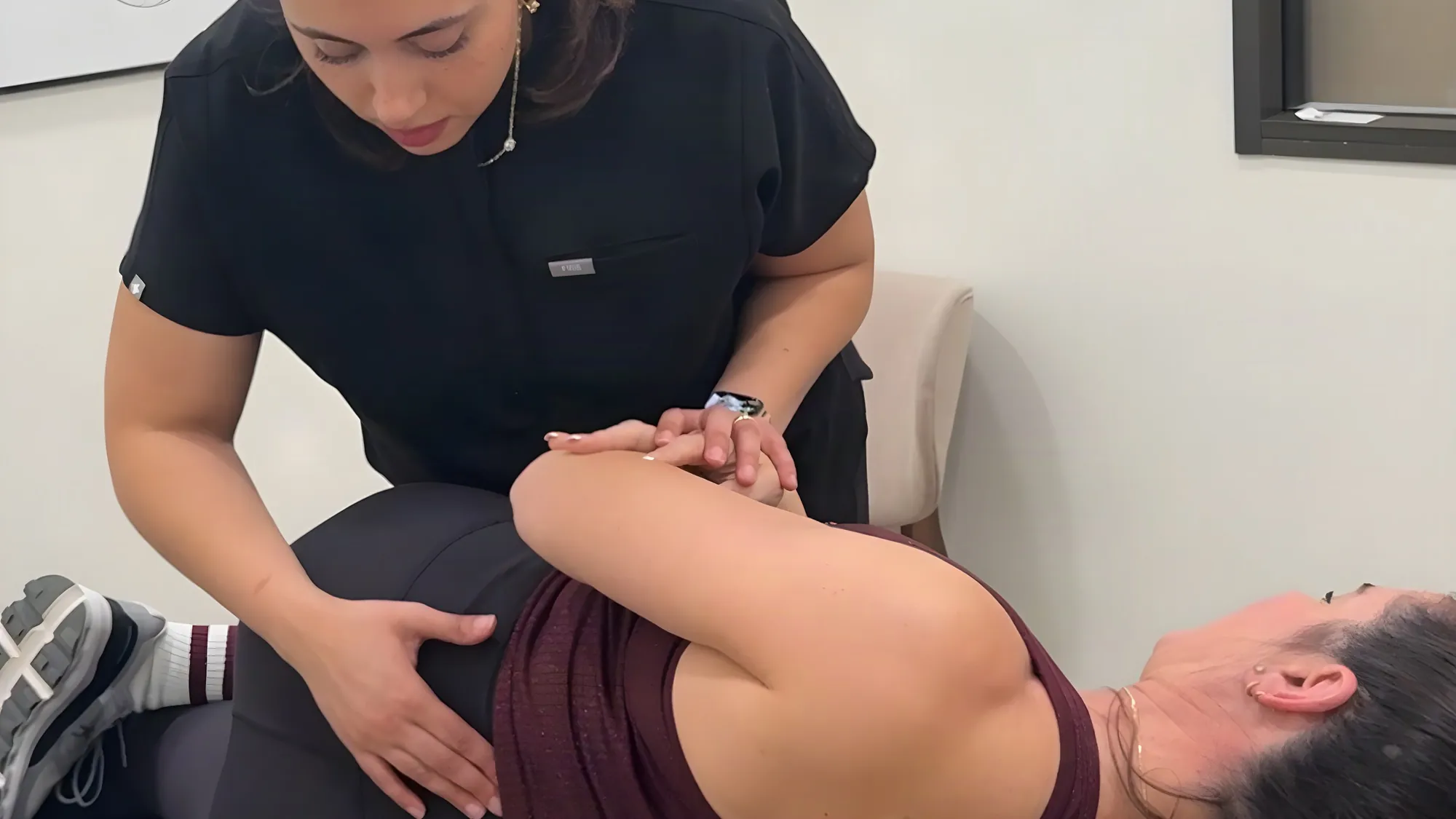
Reduce muscle spasm, manage acute pain, restore some function. Gentle adjustments when appropriate, soft tissue work for the surrounding spasm, ice/heat as appropriate, and movement within tolerance. Bed rest beyond 1-2 days actually delays recovery: the body needs gentle movement to recover.
Sub-Acute Phase (Weeks 1-4)
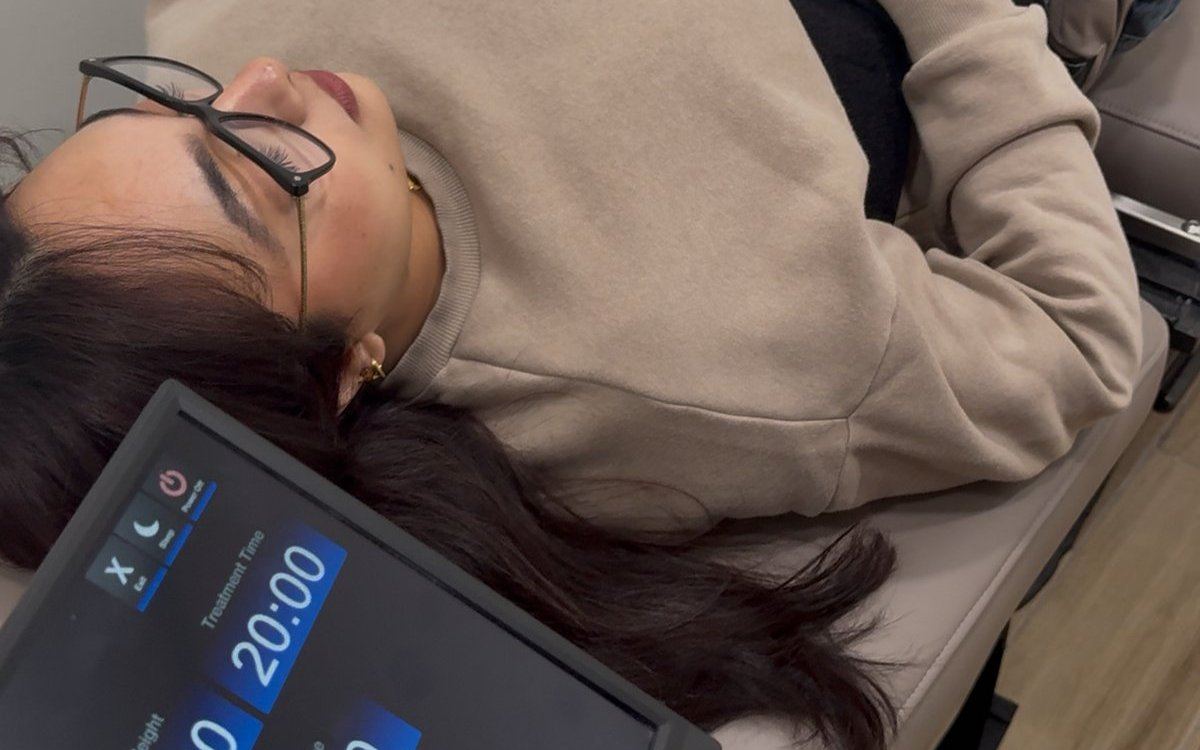
Address the underlying mechanical issue. For disc cases, spinal decompression therapy is often a key intervention: directly addressing the disc problem rather than just managing surrounding muscle spasm. Dry needling for chronic trigger points that perpetuate spasm patterns. Continued chiropractic adjustments to restore normal joint motion.
Stabilization Phase (Weeks 4-12)
Build the structural support that prevents recurrence. Core strengthening, particularly deep core activation, not just crunches. Hip mobility work to reduce lumbar load. Postural retraining to address the patterns that contributed to the weakness. Movement education: how to lift, bend, and brace appropriately.
Long-Term Maintenance
Ongoing attention to core function, hip mobility, and movement quality. Some patients benefit from periodic chiropractic care to maintain joint motion. The goal is to restore enough capacity that everyday loads, including sneezes, don't represent threats anymore.
How to Sneeze Safely (Yes, Really)
This sounds silly, but it matters. There's a way to sneeze that significantly reduces spinal load:
- Stand up straight if you can: bending forward into a sneeze maximizes the flexion-compression force
- Brace your core lightly just before the sneeze if you have warning
- Don't suppress it: suppressed sneezes still produce the muscle activation but can also produce other pressure-related issues
- Slightly extend backward if you have a vulnerable lower back: counters the natural tendency to flex forward
For patients with acute disc issues, sneezing in a slightly extended posture (looking up, leaning slightly back) is far safer than the natural forward-bend.
When to Take This Seriously
Not every sneeze episode warrants urgent care, but some do. Get evaluated quickly if:
- Severe pain that doesn't improve over 24-48 hours
- Pain radiating significantly into the leg
- Numbness or weakness in a leg
- Loss of bowel or bladder control (this is an emergency)
- Recurrent episodes: multiple in a short timeframe
- Inability to stand upright
For straightforward acute spasm without these features, conservative care typically resolves the episode in 1-2 weeks. The underlying issue usually requires longer to address properly.
The Pattern I See Most Often
The patient who's had two or three of these sneeze episodes in the past year, has chronic low-grade lower back tension between episodes, doesn't exercise consistently, sits for most of their day, and assumes this is just how their back is now. This is exactly the patient who responds dramatically to comprehensive intervention: chiropractic care, decompression for disc involvement, mobility and strength work, and lifestyle modification.
The transformation when these patients get their core function back, restore hip mobility, and address whatever disc or joint issue was driving the problem is one of the more satisfying parts of practice.
Why Blue Zone
I work with patients across The Woodlands, Spring, Magnolia, Tomball, and Conroe, many of whom come in after exactly the experience you may have just had. The clinic integrates chiropractic, decompression, dry needling, and rehabilitation in coordinated care.
The model is grounded in Blue Zones longevity principles. Long-term spinal health isn't an accident. It's the result of consistent attention to mechanical, neurological, and lifestyle factors. Working to keep a back spasm from turning into a chronic problem is one application of those same principles.
The $99 covers your exam, X-rays and your first treatment. Call (281) 688-5580 or visit bluezonechiro.com.
The $99 covers your exam, X-rays and your first treatment.
Call (281) 688-5580 or book online to schedule.
Dr. Mariam Mobarak, DC
Dr. Mariam Mobarak is the chiropractor at Blue Zone Advanced Chiropractic in The Woodlands. She combines several chiropractic techniques with therapies like spinal decompression, shockwave and dry needling, and your care is built around your exam and your goals.
TechniquesActivator, Diversified, Gonstead, Thompson, Upper Cervical and Webster
Meet our doctor →︎