If you commute into the Houston metro from somewhere north (Spring, The Woodlands, Conroe, Magnolia), you already know the drill. I-45 at 7:15 AM. The 99 toll. The Hardy. An hour and a half each way on a bad day. Two hours when there's an accident. You sit. You grip the wheel. You shift around in your seat to find a position that doesn't hurt. And then you do it all over again that evening.
I see commuter spines every single week in my office. The patterns are predictable enough that I can usually guess someone's commute before they tell me. So if you've been wondering why your low back is tight, your hips ache, your neck is stiff, and your shoulders are creeping forward, here's what those hours behind the wheel are actually doing to your body.
Your Hip Flexors Are the First to Fail
The biggest single biomechanical issue with driving isn't the posture of your back. It's what's happening to your hips.
When you sit, your hip is in roughly 90 degrees of flexion. The major hip flexor, the iliopsoas, runs from your lumbar spine, through the pelvis, and inserts on the inner thigh. While you're sitting, this muscle is in a shortened position. Hold any muscle in a shortened position for hours every day, and over time it adapts to that length. It becomes shorter and tighter at rest.
What happens then? Several things, all bad:
- Lower back pain: tight hip flexors pull your lumbar spine into excessive arch, compressing the facet joints and creating chronic low back tension
- Glute deactivation: when hip flexors are dominant, your glutes "go to sleep." This is called reciprocal inhibition and it's a real phenomenon
- Knee tracking issues: once the glutes deactivate, the small hip stabilizers can't fire properly, and your knee tracking goes off, often producing knee pain in runners and walkers
- SI joint dysfunction: pelvic asymmetry develops when one hip is consistently more restricted than the other
The single most underrated cause of chronic back pain in adults is short, tight hip flexors from sitting. And driving is sitting with the added problem of the right foot pinned forward.
Your Thoracic Spine Locks Up
Your mid-back, the thoracic spine, needs rotation and extension to function properly. It's where your ribs attach and where most of your shoulder mobility comes from.
When you drive, your thoracic spine sits in passive flexion (slightly hunched) and almost no rotation. After thousands of hours of this, the joints between thoracic vertebrae stiffen. Rotation decreases. Your shoulders compensate. Your neck compensates. The pain shows up everywhere except where the actual restriction lives.
This is why golfers, throwers, swimmers, and lifters who commute to desk jobs hit performance walls they can't break through. Their thoracic spine has stopped moving, and everything downstream has to compensate.
Forward Head Posture Is Built Into the Driving Position
Look at your driving posture next time you're stopped at a light. Most commuters drive with the head slightly forward of the shoulders, eyes scanning the road, jaw tense from concentration or traffic stress.
This forward head posture loads the cervical spine and the muscles at the base of the skull. The suboccipital muscles, small but heavily involved in headache patterns, are constantly activated. Tension headaches that show up by Wednesday afternoon? Often this. Migraines that follow long drives? Often this.
Forward head posture also compresses the cervical discs and increases the load on the upper thoracic spine. According to research published in spine biomechanics literature, every inch the head travels forward from neutral effectively doubles the load on the lower neck and upper back.
Your Right Side Asymmetry Is Real
Drivers have right-dominant patterns most clinicians miss. The right foot works the gas and brake. The right shoulder reaches forward more often (radio, cup holder, glove box, passenger). The right hip externally rotates slightly to keep the right leg in operating position.
Over time, this produces measurable asymmetry: tighter right hip flexor, slightly higher right shoulder, restricted right thoracic rotation. Patients often come in convinced their problem is "the left side", but on exam, the left side is overcompensating for an underlying right-side dysfunction.
The Stress Component Most People Overlook
Driving in Houston traffic is sympathetic nervous system activation, full stop. Your body interprets sitting in stop-and-go traffic the same way it interprets being chased: elevated cortisol, elevated heart rate, increased muscle tone, restricted breathing.
Add this to the structural load of sitting, and you get patients who walk into my office with chronic low-grade tension that never quite resolves. Adjustments help shift the autonomic balance toward parasympathetic (rest-and-recover) tone. This is one of the underrated benefits of consistent chiropractic care for commuters.
What You Can Do About It
The good news: tissue is adaptive in both directions. The same plasticity that lets your hip flexors shorten will let them lengthen back out, given the right inputs.
1. Hourly Movement Breaks
Even at work, every 45-60 minutes, stand and move. Walk to refill water. Take stairs instead of the elevator once. The total dose of standing and walking matters more than any single break.
2. Daily Hip Flexor Work
Couch stretch (kneeling lunge with rear foot on couch), 90/90 hip stretches, and active hip flexor mobilizations. Five minutes daily produces measurable change in 4-6 weeks.
3. Thoracic Mobility
Foam roller thoracic extensions, open-book stretches, and rotation drills. The thoracic spine responds quickly when you give it intention.
4. Strength Where It's Weak
Glutes, deep core, mid-back postural muscles. Most commuters have weakness in these specific patterns and overactivity everywhere else.
5. Targeted Chiropractic Care
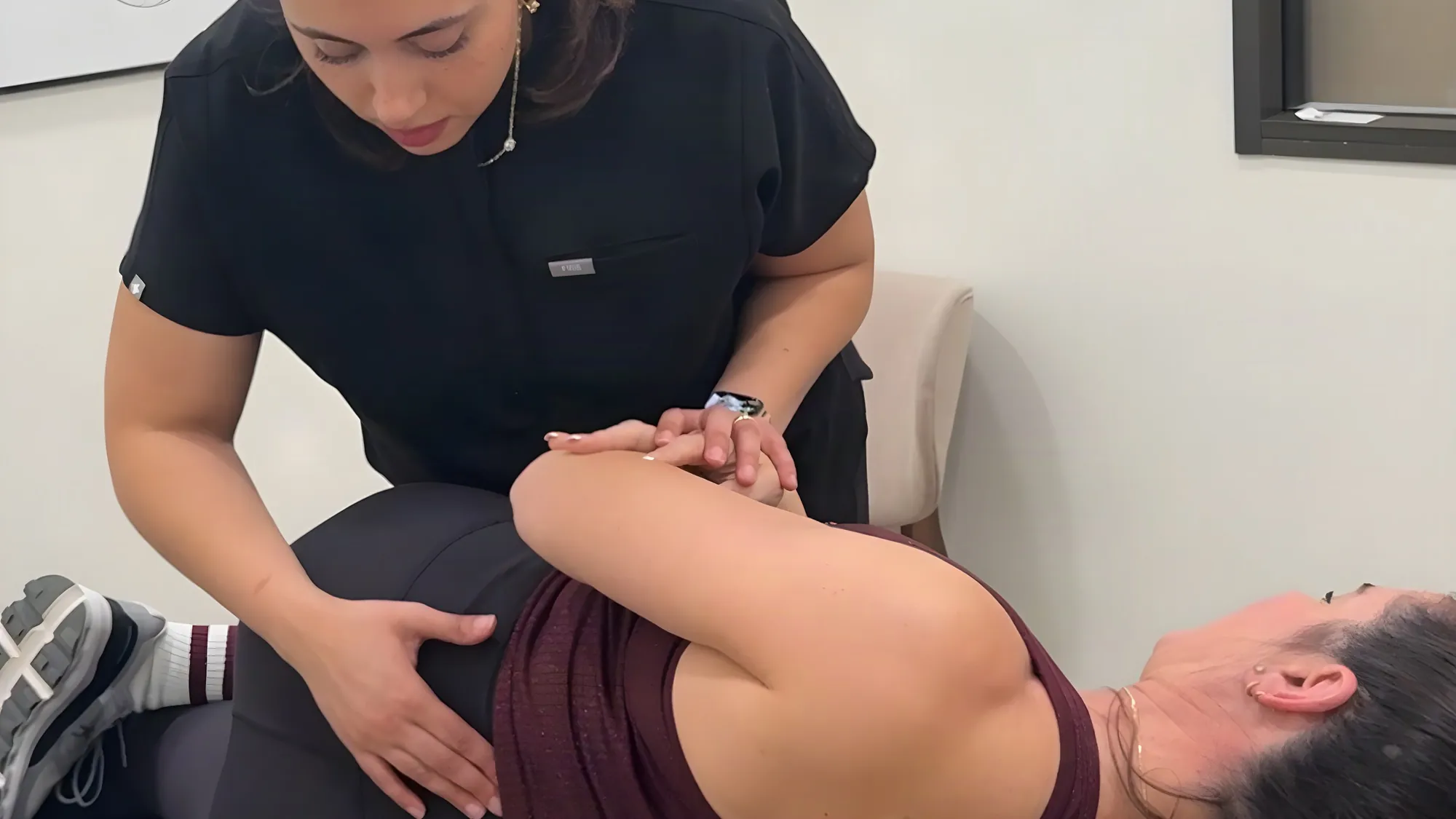
This is the piece many patients miss. Years of restricted joint motion don't fully resolve with stretching alone. Chiropractic adjustments restore the joint motion that's been lost. Combined with soft tissue work and dry needling for chronically tight muscles, the changes hold.
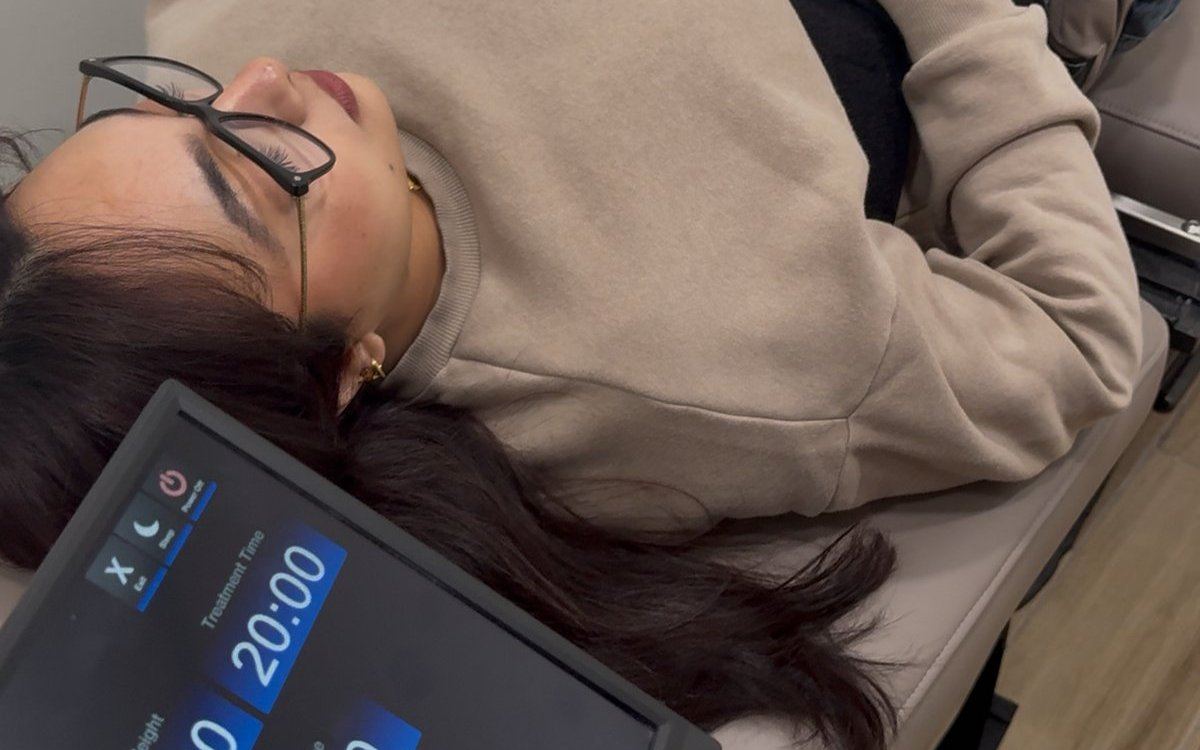
For commuters with disc-related symptoms (sciatica, radiculopathy, persistent low back pain), spinal decompression is often a real help.
What I See in Commuter Patients After 6-8 Weeks
Care for commuter strain usually combines regular visits with daily mobility work over several weeks. The goals are looser hip flexors, a more mobile upper back, fewer tension headaches, and less of the constant tightness that can start to feel permanent. Progress varies from person to person.
The exception is patients who've had years of compounded dysfunction with structural changes (disc degeneration, advanced arthritis). Those cases take longer and may need to incorporate more advanced therapies, but they still improve substantially.
Why Blue Zone
I treat commuter spines week in and week out. Many of my patients come from Spring, The Woodlands, and surrounding areas because they need care that fits their schedule and actually addresses what hours of driving has done to them. We use multiple chiropractic techniques matched to your specific case, integrate decompression and dry needling when warranted, and address the underlying lifestyle drivers, not just the symptoms.
The clinic is grounded in Blue Zones longevity principles. Living to 100 in good health doesn't happen by accident. It happens through consistent attention to the structural, nutritional, and nervous system inputs that compound over decades. Working on commuter strain is just one application of those same principles.
The $99 covers your exam, X-rays and your first treatment. Call (281) 688-5580 or visit bluezonechiro.com to book.
The $99 covers your exam, X-rays and your first treatment.
Call (281) 688-5580 or book online to schedule.
Dr. Mariam Mobarak, DC
Dr. Mariam Mobarak is the chiropractor at Blue Zone Advanced Chiropractic in The Woodlands. She combines several chiropractic techniques with therapies like spinal decompression, shockwave and dry needling, and your care is built around your exam and your goals.
TechniquesActivator, Diversified, Gonstead, Thompson, Upper Cervical and Webster
Meet our doctor →︎