Why One Technique Does Not Fit Every Patient
No two spines respond the same way. A college athlete with a locked-up mid-back segment and a seventy year old with degenerative disc disease should not receive the same adjustment, and a pregnant patient should not receive either one. At Blue Zone Advanced Chiropractic in The Woodlands, Dr. Mariam Mobarak is trained in a range of adjustment methods and chooses between them based on what your examination actually shows.
The Techniques We Use
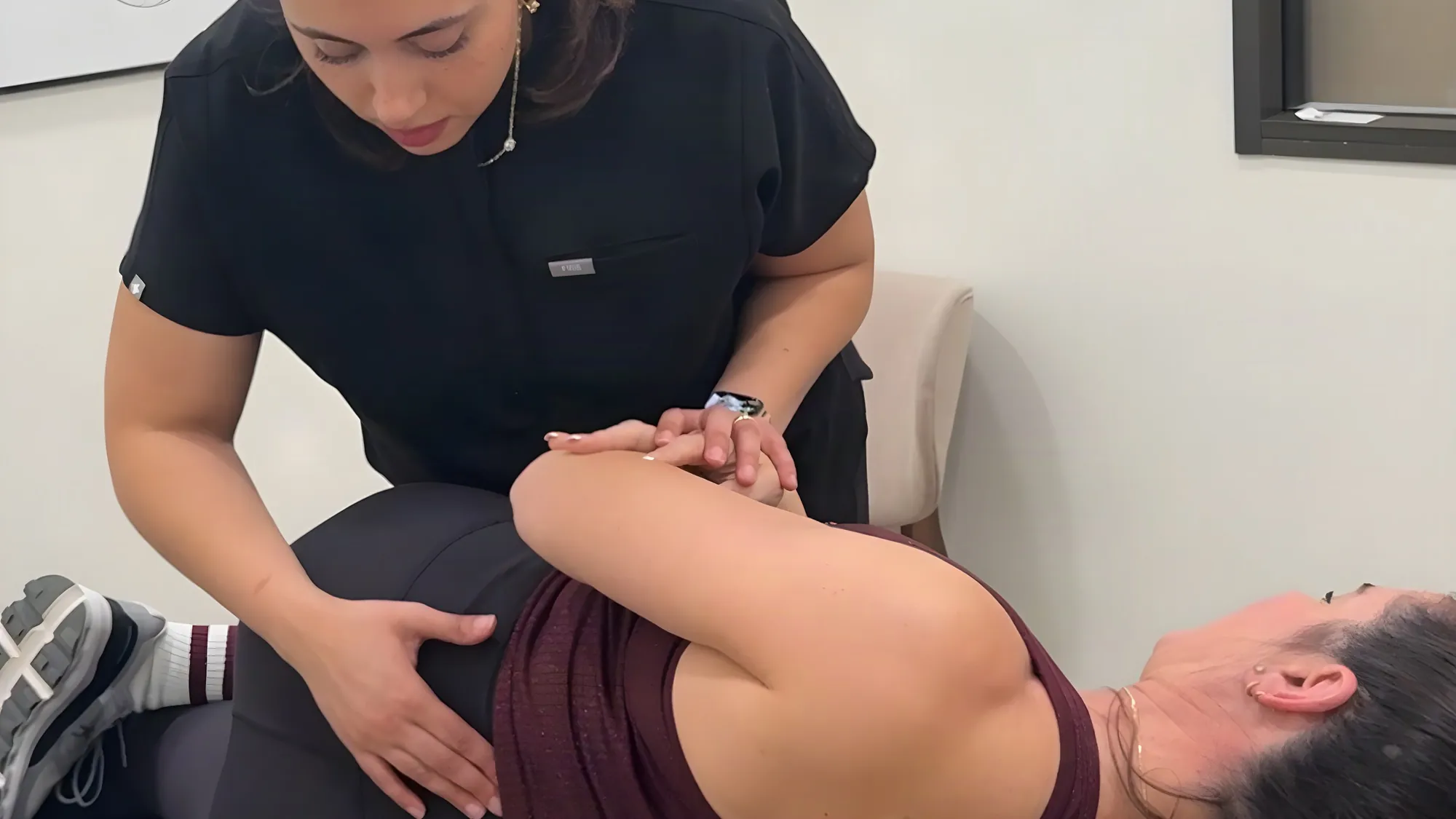
Diversified is the hands-on manual adjustment most people picture when they think of chiropractic care. It restores motion and alignment through the spine, and it is the method many patients receive.
Gonstead adds a layer of analysis, using X-ray findings and hands-on assessment to target one specific segment. It is one method in the toolkit rather than the whole approach.
Thompson Drop-Table uses a table with segmented drop pieces so the adjustment needs less force. It suits patients who are guarded, in acute pain, or nervous about being adjusted.
Activator Method is a small handheld instrument that delivers a controlled, low-force impulse. It is the usual choice for children, for older patients, and for anyone with osteoporosis.
Flexion-Distraction is a gentle, traction-based method performed on a specialized table, used most often for disc injuries, sciatica and low back pain.
Upper Cervical work focuses on the top of the neck, where alignment influences posture and nervous system function.
Extremity adjusting covers shoulders, hips, knees, ankles, wrists and jaw, because the spine is not the only joint that loses proper motion.
Webster technique is a specific sacral adjustment used in prenatal care. See our full chiropractic care services.
How Technique Is Matched to You
It is not a preference. It comes from findings. Your examination includes a detailed health history, orthopedic and neurological testing, motion and static assessment, and digital X-rays taken in our office. Together these show which segments need correction, which are already moving well, and how much force is appropriate for your body.
Knowing where not to adjust matters as much as knowing where to adjust. Correcting only the segments that need it protects the healthy ones and avoids over-adjusting a spine that is already hypermobile. That matters most for patients with degenerative disc disease, scoliosis, or a recent injury. See the full list of conditions we treat.
What Your First Visit Looks Like
Your first appointment takes about thirty minutes and covers your history, a full examination, and X-rays taken here in our office. The $99 covers your exam, X-rays and your first treatment. We would rather be thorough than fast.
The Adjustment Is Not the Whole Plan
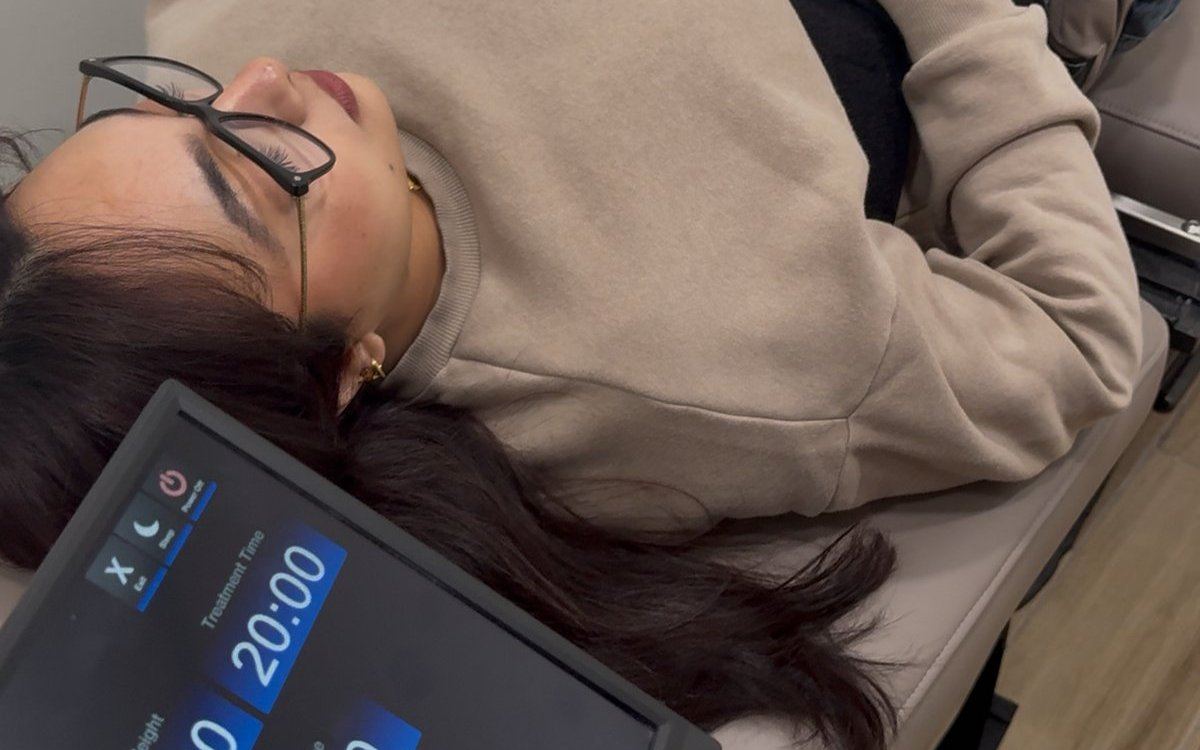
Depending on what your examination shows, your care may also include spinal decompression for disc involvement, shockwave therapy for stubborn tendon and soft tissue pain, dry needling for muscular restriction, and functional medicine when the underlying picture is metabolic rather than structural.
Book your appointment today or take advantage of our new patient special.
The $99 covers your exam, X-rays and your first treatment.
Call (281) 688-5580 or book online to schedule.
Dr. Mariam Mobarak, DC
Dr. Mariam Mobarak is the chiropractor at Blue Zone Advanced Chiropractic in The Woodlands. She combines several chiropractic techniques with therapies like spinal decompression, shockwave and dry needling, and your care is built around your exam and your goals.
TechniquesActivator, Diversified, Gonstead, Thompson, Upper Cervical and Webster
Meet our doctor →︎