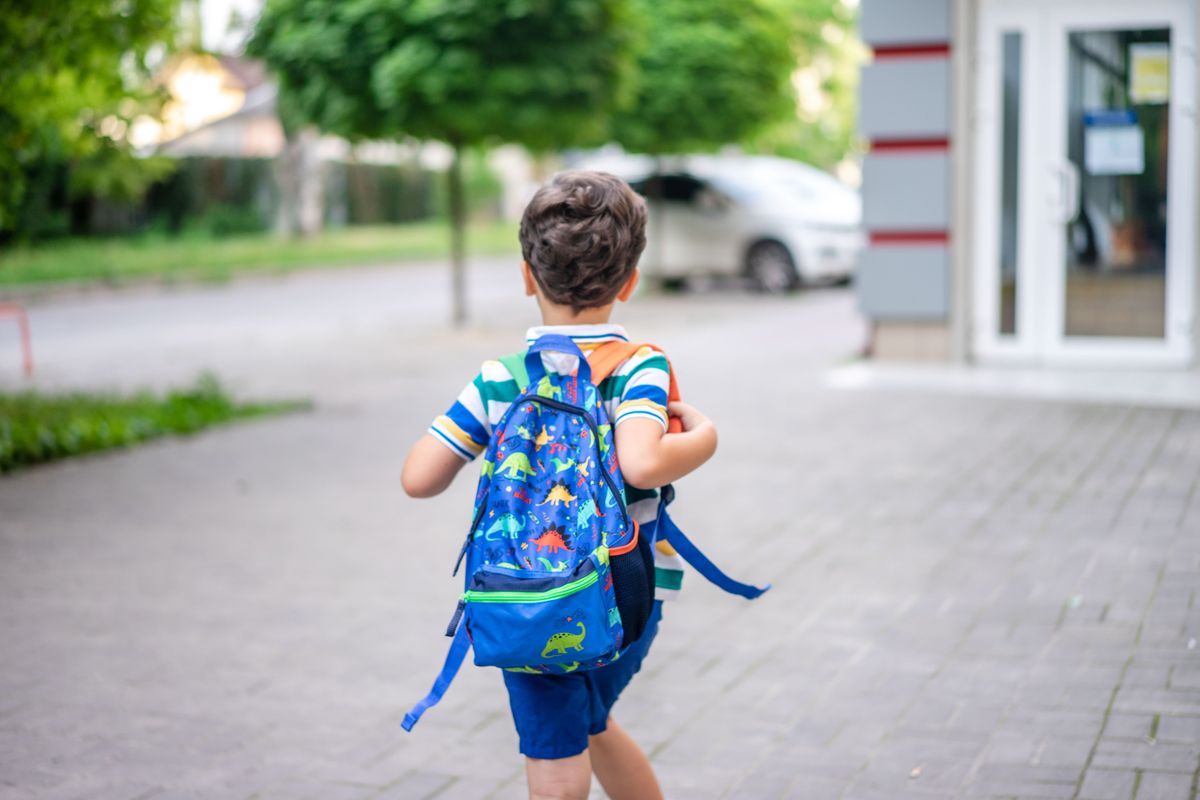
Here's a two-minute experiment for tonight: put your child's fully loaded backpack on the bathroom scale. Pediatric and chiropractic organizations converge on the same guideline — a backpack should weigh no more than about 10 percent of the child's body weight, 15 at the absolute ceiling. For a 70-pound fourth grader, that's 7 pounds. Most loaded packs we've weighed for Woodlands families come in at double that.
What a too-heavy pack actually does
Kids adapt to a heavy load the only way physics allows: they lean forward from the hips, crane the head forward to counterbalance, and hike or roll the shoulders — especially with the one-strap carry. Held for two walks a day, hallway transitions, and the bus stop wait, those adaptations become postural habits during the exact years the spine is growing and most moldable. The research links routinely heavy packs with back pain in school-age kids — and childhood back pain is one of the stronger predictors of adult back pain. Heavy packs don't cause scoliosis — that myth needs retiring — but they absolutely cause pain, muscle strain, and postural patterns worth preventing.
The warning signs parents miss
Red strap marks on the shoulders. A kid who leans noticeably forward under the pack or struggles to put it on and take it off. Complaints of tingling arms or hands (strap pressure on nerves). Rubbing their shoulders or neck after school. "My backpack is heavy" repeated more than twice — kids under-report pain to adults far more than the reverse.
Fixing it in five minutes
Lighten: weekly locker/pack audits — kids carry astonishing archives of things they never use. Ask teachers about digital textbook options; many Conroe ISD materials have them.
Fit: both straps, always — the single-strap carry loads one side of the spine asymmetrically and is the worst common habit. Straps snug so the pack sits against the back, bottom of the pack at or just above the waistline, never sagging below the low back. Use the chest or waist strap if it has one; that's not a dork feature, it's load transfer.
Pack smart: heaviest items closest to the spine, weight balanced side to side.
Choose right: wide padded straps, padded back, appropriately sized for the child — not "to grow into." A rolling bag is a legitimate option where schools allow it.
When it's more than the backpack
A child's back pain that persists beyond a couple of weeks, wakes them at night, follows a sports injury, or comes with leg symptoms deserves an actual examination rather than reassurance — persistent back pain in kids is uncommon enough that it should always be taken seriously. Pediatric chiropractic evaluation is gentle, and most school-age back complaints we see resolve quickly once the load, the posture, and any restricted joints are addressed together.
The backpack is the heaviest thing most kids lift every single day. Treat it with the same attention you'd give their sports equipment, and their spine will thank you for decades.