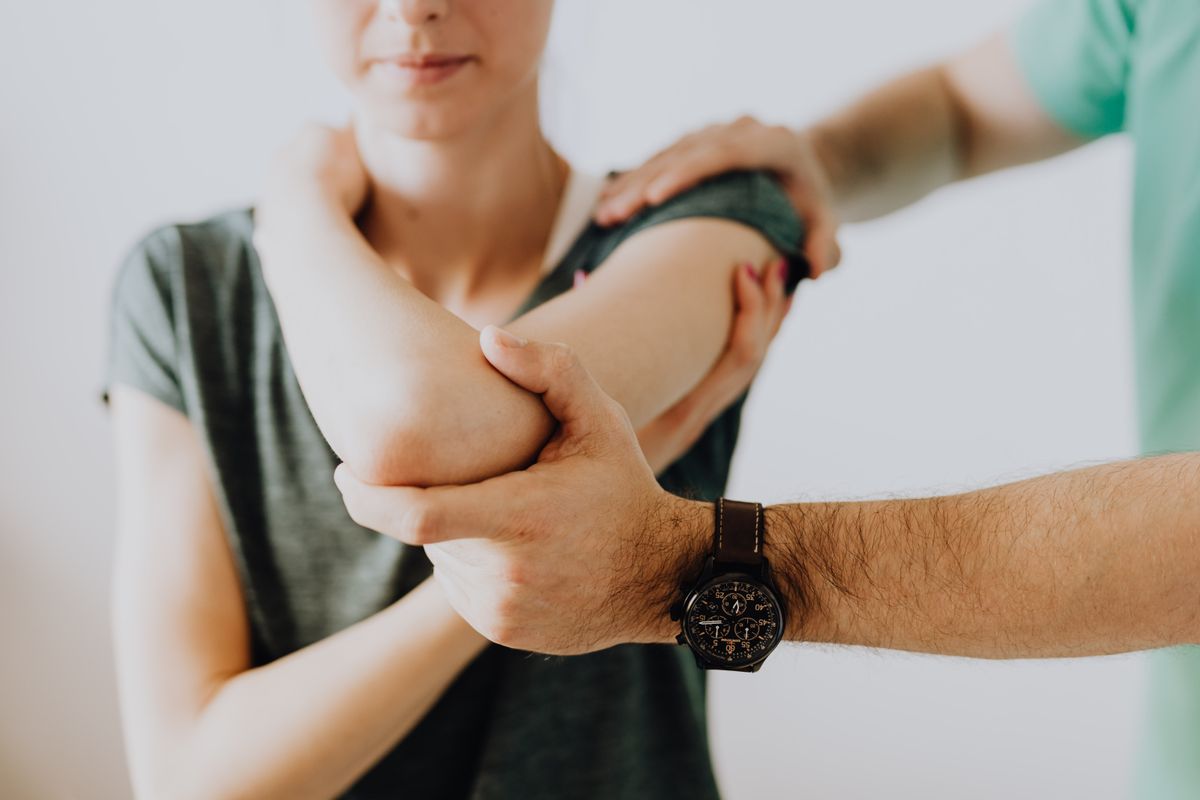
Of all the tennis elbow patients we've treated at our Woodlands office, only a handful actually play tennis. The rest are contractors, IT professionals, gym-goers, gardeners, and — lately — pickleball players. What they share is the same stubborn pain on the outside of the elbow and, usually, the same failed strategy: months of rest that changed nothing.
What tennis elbow actually is
Lateral epicondylitis is the medical name, and it's slightly misleading — the "-itis" implies inflammation, but chronic cases show something different under the microscope: tendinosis, a degeneration of the tendon where your forearm's gripping muscles anchor to the outer elbow. The collagen becomes disorganized from repetitive load without adequate recovery. This matters enormously for treatment, because degenerated tendon doesn't heal with rest and anti-inflammatories — it heals by being rebuilt, and tendon rebuilds in response to the right kind of load.
Why rest keeps failing you
Rest calms the pain temporarily, but an unloaded tendon doesn't remodel — it just deconditions. Then you return to the keyboard, the wrench, or the paddle, the weakened tendon gets the same demand as before, and the cycle restarts. This is why so many cases limp along for a year. The research on tendinopathy is clear: progressive loading beats rest.
What actually works
The modern playbook, in order: Modify, don't eliminate. Reduce the aggravating grip loads — larger grip sizes, two-handed lifting, keyboard and mouse changes — without going to zero.
Load the tendon deliberately. Eccentric and heavy-slow wrist extensor exercises are the backbone of recovery: wrist extensions with a light dumbbell, slow on the way down, progressing steadily over 8 to 12 weeks. It's boring, mildly uncomfortable, and it's the intervention with the best evidence.
Treat the whole chain. Here's what most elbow-only treatment misses: gripping mechanics start at the neck and shoulder. Cervical joint restrictions can irritate the nerves feeding the forearm and are found more often in stubborn tennis elbow cases; a stiff shoulder or mid-back changes how load reaches the elbow. Our exam covers the pathway — and treats the restrictions it finds — which is frequently the difference-maker in cases that failed elbow-only care.
Hands-on support. Soft-tissue work on the forearm extensors, instrument-assisted therapy over the tendon, and in appropriate chronic cases, shockwave therapy — which has solid evidence for stubborn tendinopathy and which we use in-office for exactly these cases.
A counterforce brace — the strap below the elbow — can reduce strain during unavoidable work. It's a tool, not a treatment.
What about cortisone?
Worth knowing: steroid injections often help for a few weeks, but multiple studies show worse outcomes at one year compared to exercise-based care — the injection weakens tendon tissue that's already degenerating. It's a short-term rental with a long-term bill, and we'd rather you know that before deciding.
The timeline
Honest expectations: tendon remodeling takes weeks to months, not days. Most patients feel meaningful improvement within 6 to 8 weeks of consistent loading plus care, with full resolution over three to six months. Slow, but durable — which beats a year of on-again, off-again pain. If your elbow has been nagging since spring, the tendon isn't going to rebuild itself. Give it the plan it actually responds to.