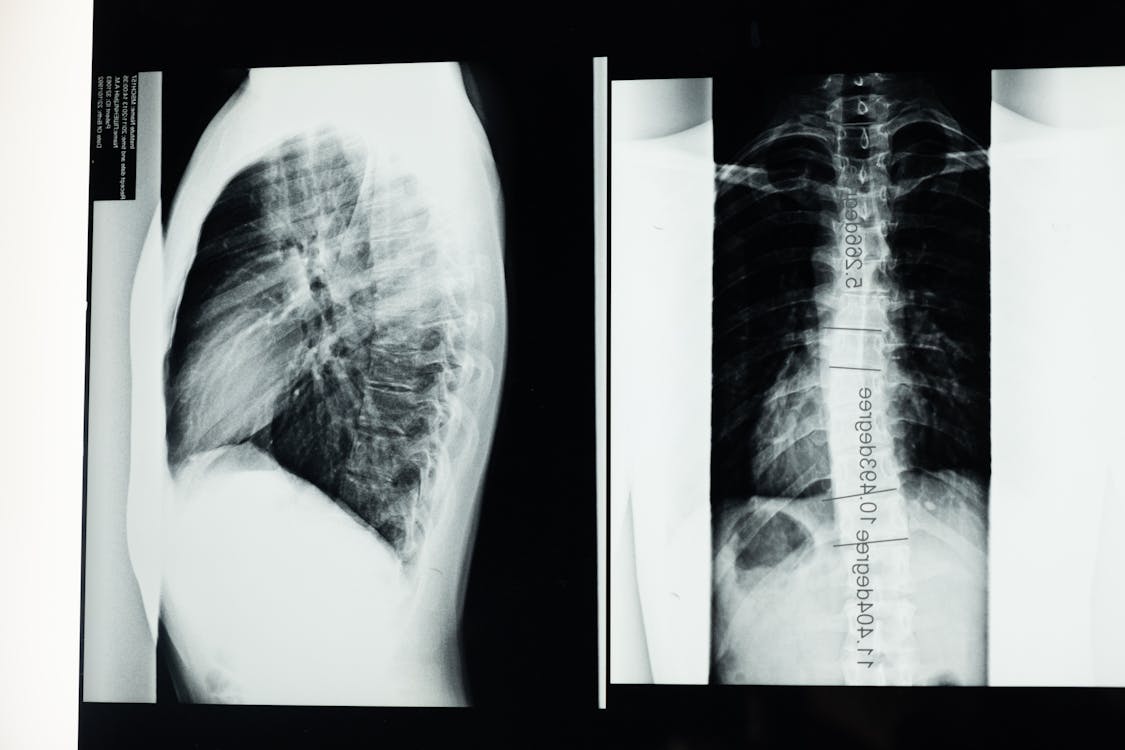
A herniated or bulging disc usually comes with a narrow menu — anti-inflammatories, muscle relaxers, physical therapy, an epidural injection, and surgery if those fail. What's often missing is the option that addresses the mechanical problem most directly: spinal decompression therapy.
Many who arrive convinced surgery is their only path improve dramatically through a decompression protocol. Not everyone avoids surgery this way, but a meaningful majority do. Here is what's actually happening in a herniated disc, how decompression addresses it, and what realistic outcomes look like.
What a Herniation or Bulge Actually Is
A disc has two parts: a soft inner core (the nucleus pulposus) and a tough outer ring (the annulus fibrosus). In a healthy disc, the annulus contains the nucleus; in a herniation or bulge, that containment fails. The terminology:
- Bulge — the disc extends past its normal margin but the annulus is largely intact, like an overfilled balloon
- Protrusion — the inner material pushes against the annulus, creating a focal extension
- Herniation (extrusion) — the inner material breaks through the annulus and protrudes outside the disc
- Sequestration — a fragment of disc material breaks free entirely
Symptoms depend less on the type than on what the displaced material is doing — especially whether it's compressing a nerve root or impinging on the spinal canal.
Why Symptoms Happen
A bulge or herniation can exist with no symptoms at all — studies of pain-free adults show plenty of disc abnormalities on MRI. Symptoms emerge when the displaced material does one or more of the following:
- Compresses or irritates a nerve root, producing radiating pain, numbness, or weakness
- Releases inflammatory chemicals that irritate surrounding tissue
- Reduces the space available for spinal structures
- Causes mechanical instability at the involved level
The combination of mechanical compression and chemical inflammation produces the classic pattern — radiating leg or arm pain, sometimes worse than the back or neck pain itself, often with numbness, tingling, or weakness.
How Decompression Addresses It
Spinal decompression uses computer-controlled traction to create a negative-pressure environment at specific levels, and the effects target what's gone wrong. The vacuum-like effect within the disc draws displaced nucleus material back toward center in many cases — imaging studies have documented measurable reductions in herniation size after a course of treatment, so the material pressing on the nerve simply isn't pressing as hard. Mechanical relief lets inflammatory chemicals disperse, and because chemical irritation is often a bigger pain driver than compression alone, symptoms can ease more than imaging would predict. Better fluid exchange improves disc nutrition, so the tissue heals better and the annulus can do its limited but real micro-healing. As the disc draws back and inflammation falls, the compressed root gets the space it needs — radiating symptoms usually respond first, with leg or arm pain easing before back or neck pain.
What the Research Shows
Studies of non-surgical spinal decompression for disc herniation report meaningful improvement in 70-86% of treated patients. The data is strongest for lumbar herniations, but cervical decompression also shows good results in appropriate cases, and pre- and post-treatment MRI has documented actual reductions in herniation size in a significant share of patients.
What a Protocol Looks Like
A typical course is 20 sessions over 6-8 weeks. Early sessions are often shorter and more cautious, since acute herniations need careful handling to avoid aggravation, and parameters progress as tolerance builds. Most patients find the treatment comfortable — many fall asleep, and the negative-pressure phase produces a gentle, sustained stretch. Progression tends to follow this pattern:
- Sessions 1-5 — early, often subtle response; some feel better, some temporarily worse as tissue responds
- Sessions 6-10 — meaningful improvement in radiating symptoms for most patients
- Sessions 11-15 — back or neck pain catches up to the radiating-symptom improvement
- Sessions 16-20 — consolidation of gains and fuller function
Afterward, periodic maintenance helps preserve the gains, and most patients also benefit from chiropractic care, dry needling for chronic muscle patterns, and core strengthening.
What About Surgery
Spine surgery has a role. Progressive neurological deficits, severe motor weakness, loss of bowel or bladder function, or pain intractable to all conservative care all deserve surgical evaluation, and surgery is sometimes necessary and often successful. The real question is whether it's the right first option or the right last option. For most patients with disc herniation, exhausting good conservative care first — including decompression — is the more defensible path, since spine surgery carries meaningful complication rates and outcomes that, while often good, aren't universally positive.
Combining With Other Care
The best results come from pairing decompression with comprehensive care:
- Chiropractic care — restoring proper motion at involved and adjacent levels
- Dry needling — addressing the chronic muscle patterns that develop around herniations
- Movement education — loading the spine in healing rather than reinjury patterns
- Core function work — building the deep stability that supports healed discs
- Anti-inflammatory lifestyle — diet, sleep, and stress management
That's what comprehensive care looks like when the goal is actual tissue healing rather than symptom suppression.
Realistic Expectations
Most patients with disc herniation respond well to a properly structured protocol, most avoid surgery, and many return to full function; some have minor residual symptoms, and a smaller number need additional intervention. The patient most likely to do well has a moderate-sized herniation, intact neurology, symptoms under six months old, willingness to commit to a full protocol and supporting lifestyle changes, and no significant structural issues beyond the herniation. The patient less likely to do well has a large herniation with sequestered fragments, progressive neurological deficits, symptoms beyond a year without any conservative care, significant additional pathology, or an unwillingness to complete the protocol.
Why Blue Zone Advanced Chiropractic
Blue Zone Advanced Chiropractic works with patients across The Woodlands, Spring, Magnolia, Tomball, and Conroe dealing with disc herniations and bulges, integrating chiropractic care, spinal decompression, dry needling, and rehabilitation into coordinated care built to address the actual mechanical problem.
The model is grounded in Blue Zones longevity principles. A herniated disc addressed properly in someone's 40s or 50s is dramatically different from one left to deteriorate into their 60s or 70s — the window to make a real structural change is now, not later.
The clinic's $99 new patient visit covers consultation, exam, X-rays when indicated, and a candid discussion of whether decompression is appropriate. Call (281) 688-5580 or visit bluezonechiro.com.